
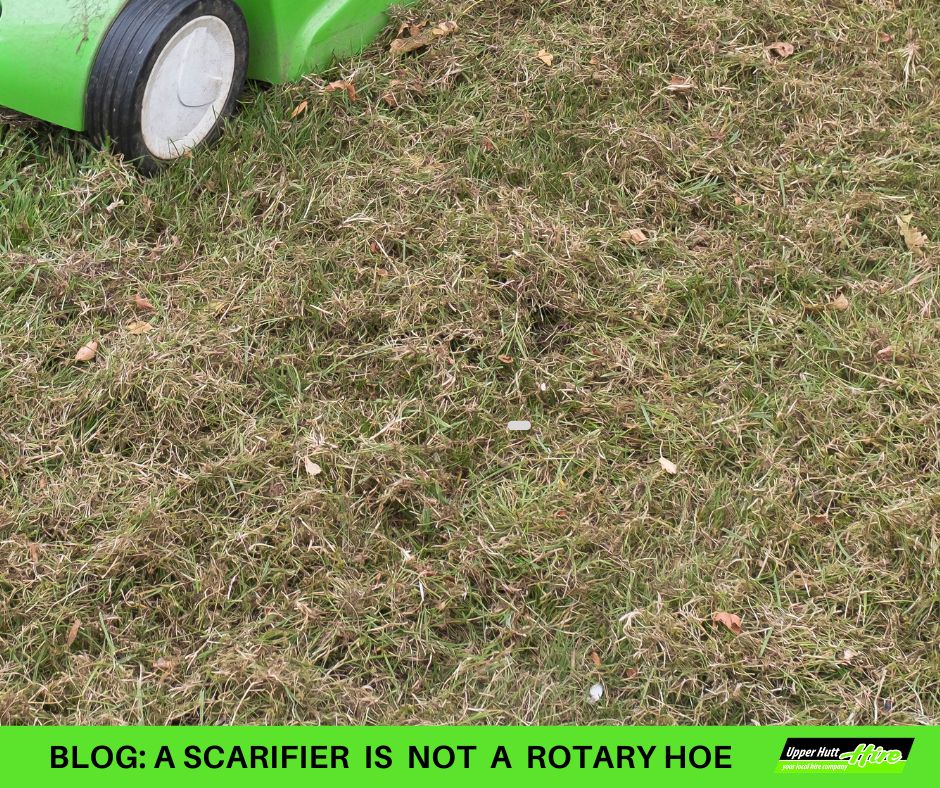
Autumn and spring are both busy seasons for lawn maintenance. Demand for scarifier, lawn aerators and rotary hoes is constant. Generally the ground has softened up in the autumn months to allow the machinery to work and penetrate the grass layers. Conversely springtime sees a reduction in sodden ground and less likelihood of contending with mud.
While dethatching, scarifying, and rotary hoeing all involve
disturbing the ground, they serve very different purposes in lawn care.
A dethatcher or scarifier is specifically designed for lawn
regeneration. It works at the surface level, using tines or blades to remove
built‑up
thatch, moss, and dead material from within the grass sward. This process
improves airflow, water penetration, and nutrient uptake without destroying the
existing lawn structure. The grass is stressed temporarily but quickly recovers
with stronger, denser growth.
A rotary hoe, on the other hand, is a soil cultivation tool.
It aggressively churns and breaks up soil, making it ideal for gardens,
seedbeds, or soil preparation—but unsuitable for established lawns. Using a
rotary hoe on a lawn will tear up grass roots, disrupt soil structure, and
effectively destroy the turf, often requiring a complete reseed or re‑turfing.
It also requires a robust machine and plenty of power to break up the sod.
Unfortunately many customers use scarifiers as rotary hoes.
They tend to set the machine to cut well below the grass layer, resulting in
the scarifier clogging or breaking.
In short, scarifying rejuvenates a lawn; rotary hoeing
removes it. Choosing the right tool makes all the difference between recovery
and starting over.